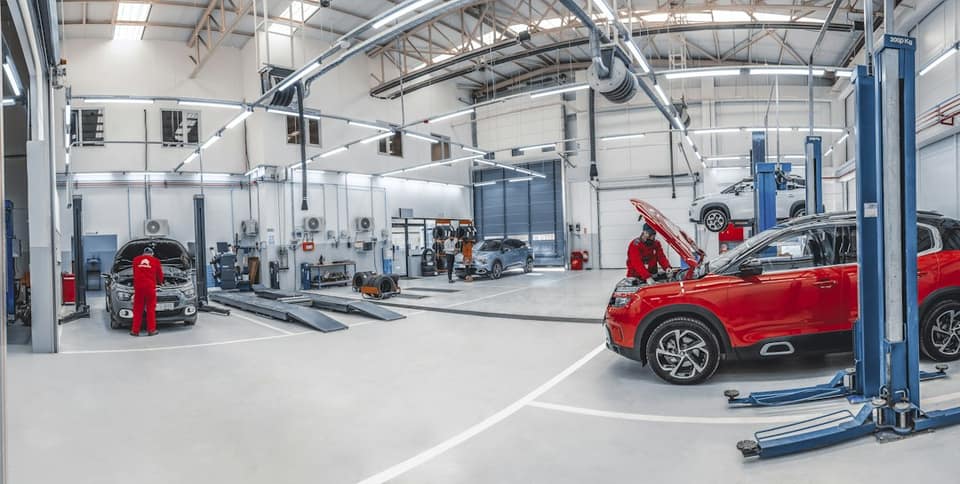
Most drivers think about workshops twice. Once when the car is due for servicing, and once when it has a fresh dent. The two choices follow different rules. One is set by your insurance policy. The other is mostly up to you.
Here is how to think through both, and what to ask before anyone picks up a spanner.
Start with your own policy
Every comprehensive policy asks where the car will be repaired after a claim. There are two answers. With an authorised workshop, the repair goes to a workshop the insurer has approved, and the insurer deals with it directly. With any workshop, you choose where the car goes, often the dealer's own, and the insurer charges more for that freedom.
Find out which one you bought. It is printed in the policy schedule or certificate. Many drivers renew for years without checking. Look before you need to claim, not on the road shoulder with hazard lights on.
Do not assume the cover follows the car. A new policy, a new insurer or a renewal can change the workshop option. If you switched to save money, the saving may have come from this line. Read it again after every renewal.
Repairs under insurance: what the choice costs
Look at the price gap, not just the headline premium. The site's authorised or any workshop page compares the two, insurer by insurer. Its example is a 3-year-old Toyota Corolla Altis 1.6, a driver aged 40 with 10 years' driving and 50% NCD. Prices are as of 25 Oct 2026, GST included.
Know the spread. In that example, the extra charge for any-workshop cover ran from S$71.39 to S$377.68 a year. Across the insurers that offer both, the middle one charged 18% more. Two charged the same price either way. One did not offer an any-workshop option online at all. The gap is not a fixed rule, so compare it for your own car.
Check the authorised list before paying extra. If you want a particular workshop, such as the dealer's, ask the insurer whether it is already on the authorised list. If it is, the extra premium may buy you nothing. If it is not, any-workshop cover is how you get the car there.
Weigh who runs the repair. With an authorised workshop, the insurer manages the job and talks to the workshop. That is less paperwork for you. With any workshop, you have more say, and usually more phone calls. Decide which of those you would rather live with.
Compare both options side by side. The quote form's results page lets you switch between the two. You can see each price at once on the compare page, or browse current figures on prices. The excess is worth a look at the same time; the car insurance excess guide explains it.
Servicing: dealer or independent
Servicing is not normally run through insurance. You pay, you choose. The question is what you give up or gain either way.
Read the warranty booklet first. If the car is still under the maker's warranty, the booklet sets out the servicing terms. Some warranties name conditions about where and how the car is serviced. Read them before you book. If anything is unclear, ask the agent who sold the car to put the answer in writing.
Compare the service schedule, not the sign. A dealer and an independent workshop should be working from the same maker's schedule. Ask each one which items they will do at this visit. Then compare like with like. A short list at a low price is not the same job as a full list.
Ask what parts go in. There are original parts from the car maker, parts from the same suppliers sold in other boxes, and aftermarket parts. Each has a different price. Ask which kind the quote assumes, and ask to see the boxes or the old parts afterwards.
Ask about tools for your car. Newer cars, hybrids and electric cars often need the maker's own diagnostic software. Ask whether the workshop has it for your make and model. A workshop that mostly sees older petrol cars may be the wrong place for a battery fault.
Keep every invoice. A complete service record helps when you sell the car or when a warranty question comes up. Keep paper copies in a folder and photos on your phone. Make sure each invoice shows the date, the mileage and the car's registration number.
Questions to ask any workshop
Whether it is a dealer, an independent shop or an authorised workshop sent by your insurer, the same questions apply.
Ask for a written quote before work starts. Get the parts, the labour and the total on paper or by message. Ask them to call before doing anything not on it. Unplanned extras are where bills grow.
Ask how long the job will take. For accident repairs, ask too whether a replacement car is part of your policy or the workshop's offer. Many drivers rely on the car for work and the school run. Plan around the downtime early.
Ask how long the workshop stands behind its work. Get the answer in writing on the invoice. Ask what happens if the same fault comes back, and whether you pay for the second visit.
Ask who does the work. Some workshops pass jobs such as paint, glass or air-con to other shops. That is common and not a problem in itself. You just want to know who has your car and where it is parked overnight.
After an accident
The workshop choice gets rushed most often at the roadside. A little preparation helps.
Know your insurer's steps before you need them. Each insurer runs its own claims process, mostly online. The site's claims page lists where to start for each one. Save the right contact in your phone now.
Check before agreeing to a tow. A tow truck may offer to take the car to a workshop of its choosing. If your policy is for authorised workshops, a repair elsewhere can complicate the claim. Call your insurer first and ask where the car should go.
Report where the rules require it. Reporting rules and deadlines depend on what happened. They are not set out here. For reporting an accident, check with the Singapore Police Force. For vehicle rules more broadly, LTA's OneMotoring site is the reference.
Think about your NCD before you claim. A claim can affect your no-claim discount, which affects what you pay at renewal. The no-claim discount guide explains how it works. For a small scrape, some drivers ask a workshop for a quote first, then decide.
The short version
For repairs under insurance, the workshop is decided when you buy the policy, not when you crash. Check which option you have, what the other one costs for your car, and whether your preferred workshop is already on the authorised list.
For servicing, read the warranty terms, compare like-for-like schedules, and get everything in writing. Keep the invoices. The workshop you choose matters less than knowing exactly what you asked it to do.
Car insurance through Shenton Brokers
Before you drive off or renew, get your car insurance through Shenton Brokers. See which cars cost least to insure, or look up your own model's prices from every insurer we compare. Or get a quote with your own details.